Sign up for the Family Tree Newsletter Plus, you’ll receive our 10 Essential Genealogy Research Forms PDF as a special thank you!
Your ancestors’ style choices can not only help you identify when a photo was taken, but they can also give you clues about their lives and experiences.
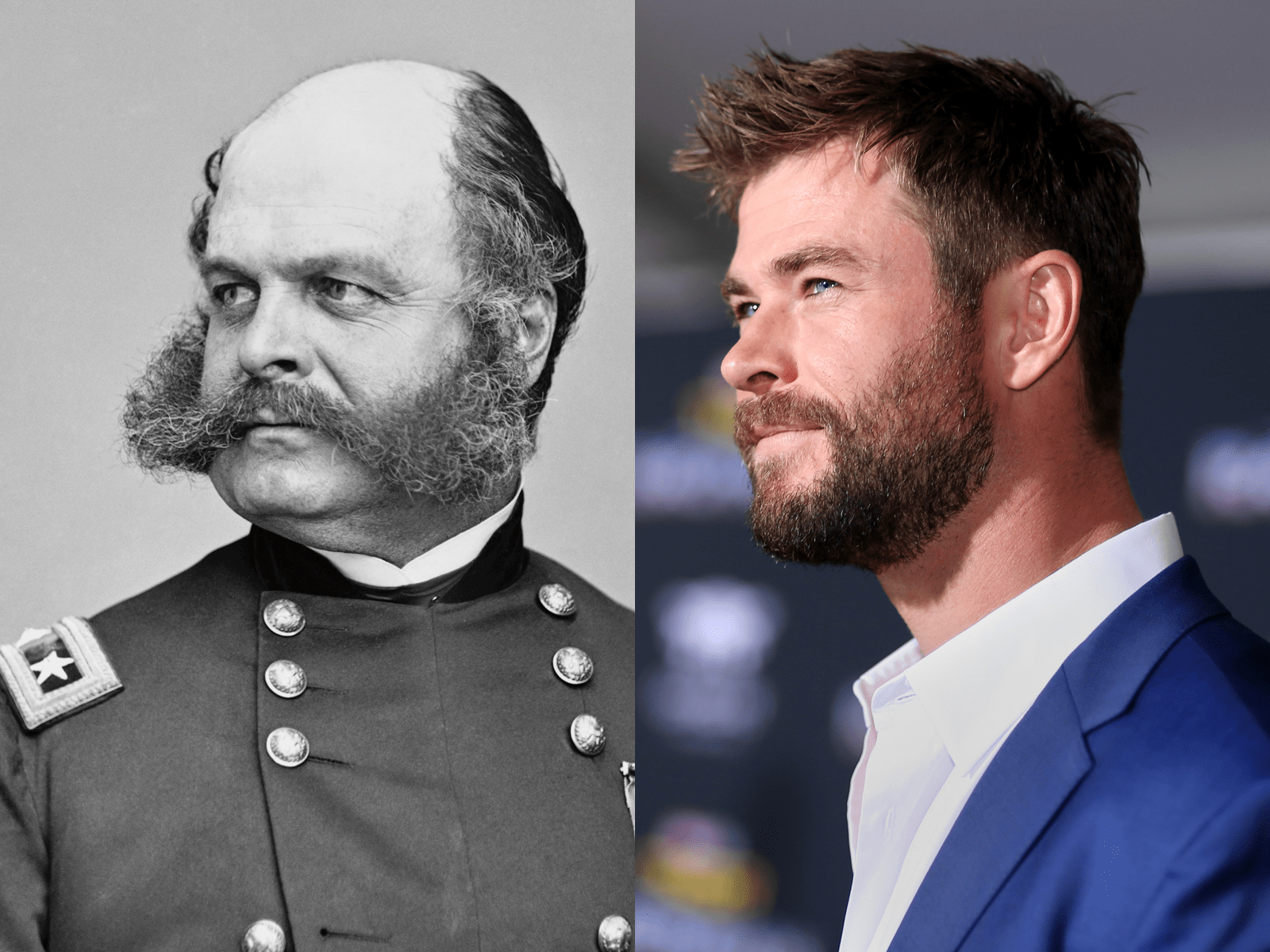
It’s common practice to look for photo clues in clothes and accessories, but what you may not know is your ancestor’s facial hair can contain a wealth of information as well! Men styled their beards and mustaches in different ways and for different reasons throughout history.
Last Mink397: 57 Year Old, Handsome, European, Caucasian, White Male Hipster, Almost Bald, Short Salt And Pepper Colored Hair, Facial Hair, Salt And Pepper Colored Full Beard, Short Cut Beard, Happy Expression, Smilecore, Glasses, Wearing A Hoodie,
Here is a quick overview of the history of facial hairstyles in the United States. From frontier beards to waxed mustaches, here’s what you need to know to identify key clues in your ancestors’ facial hair.
Due to political conflicts at the time, facial hair was somewhat associated with the French and therefore avoided by many. However, you will also see some examples of men sporting fringe beards under the chin.
The 1850s were a tumultuous time for men’s hair, particularly in England. After years of being discouraged from growing facial hair, a ‘mustache movement’ began to take place among the British Army in 1831, specifically those in India. These styles would still raise eyebrows until the Crimean War when the tables turned and men were encouraged to grow bushy beards to protect them from the bitter cold. Facial hair took on new meanings of bravery and manliness and their popularity grew in both Europe and the United States.
Fabulous Facial Hair Of The 1800s In Sonoma County
Beards continued to grow in popularity, in part due to the influence of unshaven frontiersmen. By the time the Civil War began, men across the country were sporting a wide array of facial hair styles.
Abraham Lincoln grew his distinctive beard on the advice of a young girl named Grace Bedell. Following US Presidents Ulysses S. Grant, Rutherford B. Hayes and James A. Garfield followed his lead.
Even Uncle Sam himself gained a beard. Cartoonist Thomas Nast began drawing the character with a long beard, which would remain one of his key features.
How Men's Facial Hair Has Changed Over The Past 200 Years
After the war, men continued to wear many different styles of facial hair. When they went to the barber they could choose styles based on charts like the one below.
In the 1880s, James Wilkins chose a mustache known as the Pennant. In the 20th century, artist Salvador Dalí was famous for an exaggerated version of this style (this mustache was made famous again recently for retaining its extreme shape even after Dali’s death).
(Left) This man in the 1880s wears the beard but not the mustache for the Imperial style. I’ve also seen this beard referred to as the Spade.
Old Chinese Man With White Beard And Hair Holding Ancient Script In Black And White And Realistic Style
In this era beards became less common and more men choose to go clean-shaven or opt for highly styled and groomed mustaches. The handlebar style was popular, shaped with brushes and wax.
Remember, men would sometimes wear a style for a many years. In this photo, Orville Wright wears the Pennant style in 1905, 20 years after the publication of the beard trimming chart above.
Facial hair was an investment of time and resources. Men would visit barbers often to maintain appearances. The increase in men foregoing facial hair inspired young businessman King C. Gillette to patent his disposable razor in 1904.
Facial Hair According To Decade
By this time the “Victorian beard craze” was finally beginning to fade. During WWI, the US military required men to be clean shaven for sanitary reasons and also so that there wouldn’t be any interference with the seal of a gas mask.
However there was one distinct facial hair style that came out of this era, popularized by comedians like Charlie Chaplin and Oliver Hardy. This style is commonly called “toothbrush mustache.”
Film stars began to have an effect on popular facial hair styles. For example, Errol Flynn’s pencil thin mustache and Clark Gable’s distinctive look in Gone with the Wind.

Top 4 Moustache Styles For Modern Gentlemen (and How To Get Them)
Keep your eye out for some of these famous styles on your ancestor’s faces. If you have a family photo you’d like to learn more about, you can submit it via maureentaylor.com.
This mystery photo features a lovely assortment of Gilded Age hat styles. Let’s take a closer look at the details in this photo, (including the hats!) to see what more we can learn.
Maureen A. Taylor has a new uniform mystery to work through, and she’s letting us in on the steps of her investigation. Who could this gentleman be? See if you can help us work through the clues.But that’s rarely how the human brain works. As we’ve discussed before in regards to style, there are definitely some black/white rules, but for the most part each man needs to discover what works best for him. He needs to express himself through his style choices, within some basic frameworks.
Here Are The Most Popular Beard Styles Over The Past 16 Decades
One fascinatingly complex issue that has come back into the spotlight recently is that of facial hair. It’s not something you can break down into basic good/bad or right/wrong strategies. It all depends on the individual.
Forget anyone who tells you that beards are a 100% guarantee to be an alpha male lady-killer. Also forget anyone who says they’re an automatic job-loser and impossible to pair with a business suit.
With a little bit of research, you can figure out the length and style of facial hair that’s right for your life, your career, and your goals.
Different Beard Styles For Men For Different Face Cuts And Personalities
Scientific research can tell you what other people are thinking when they look at your beard, which should give you a good idea of whether a beard is the right choice for your life.
Here’s the most basic breakdown. When you have distinctive facial hair (anything visible, even stubble), these are the traits people tend to associate with you:

A beard is a sign of active testosterone in the body, and human brains recognize that as coming with the potential for more aggression.
Braided Beard Images, Stock Photos, 3d Objects, & Vectors
As a result, men with beards are often seen as more angry, aggressive, or dominant, even if their personality has none of those traits.
In one study, photographs of bearded men and non-bearded men making the same aggressive facial expression (scowling, baring teeth, etc.) were compared. The bearded men were rated as significantly more aggressive and intimidating, even when all other factors were identical.
That’s not inherently a bad thing — but it is a thing to keep in mind if you choose to wear a beard. For example, it’s never a great idea to be the guy at the front of a protest rally, face-to-face with the cops, and also sporting a huge beard!
The Science Of Facial Hair: What Signals Do Beards, Stubble, And Mustaches Send To Others?
Since the ability to grow a beard is a sign of physical maturity in men, it is naturally associated with age and grown manhood — as is evidenced by a study that found that beards were associated with maturity, power, and higher social status by both men and women.
Men with beards are also, predictably, perceived as being more “masculine” or “manly” than men without. A large 2013 study asked both men and women to rate photographs that showed one man with varying stages of facial growth. The longer the hair in the photograph shown, the more masculine he was rated.
While beards are associated with dominance, power, and maturity, on the flip side of the coin, that kind of masculine image can make people feel a little intimidated; one study found that bearded men are perceived as 38% less generous, 36% less caring, and 51% less cheerful than their clean-shaven brethren.
Shaves Styles For Men
Likely for the same reasons that beards are seen as a sign of aggression, going beardless is often interpreted as a sign of being well-socialized and able to integrate with others.

Breaking this down to any kind of alpha/beta male idea is oversimplifying — it has more to do with what makes a man look like he takes charge versus one who gets along well with others.
Studies have found clean-shaven men to be more highly-rated in terms of social skills than their bearded brethren, based purely on still images — there was no actual observed socializing to base judgments on.
What Is The Name Of The Facial Hair Style That Consists Of A Mustache But No Beard?
Going clean-shaven gets you points for cleanliness, but beards aren’t necessarily seen as sloppy. In another 2013 study, it was stubble that took the biggest knock for perceptions of health and cleanliness. A patchy, light stubble was rated the lowest — most viewers interpreted it as a sign that the wearer didn’t groom regularly.
That doesn’t mean people found stubble inherently unattractive. Different studies have found different amounts of facial hair most “attractive” (more on that in a minute). But as far as the wearer’s perceived health and cleanliness go, a clean shave is best, followed by a full beard.
Do these perceptions mean every man should run out and grow a large beard so that everyone will see him as a mature and “doesn’t take no for an answer” type of leader? Of course not.
Manliest Mustaches And Beards
Being perceived as “manly” or “dominant” isn’t always useful. Not all social settings call for an aggressive leader. The more socialized appearance of a clean shave might be more useful, for example, in job interviews where the interviewee will be expected to be part of a team when hired.
Similarly, older men who already

0 Comments
Post a Comment